AI and creative work
Examples such as Adobe Sensei, DeepAI and Namelix helped me examine the possibilities and limits of automated design, from image editing to generating names and logos.
Student project · 2021
Artificial intelligence and the future of everyday agency work.
Bachelor thesis · 2021
In my bachelor thesis, I explored how artificial intelligence could change the work of designers. I was particularly interested in which tasks a digital assistant could take on and how this could create more room for ideas and design.
The research led to the concept for AiBox: a fictional AI system for agencies, accompanied by a logo and the concept for an animated promotional video.
The thesis was written in 2021. The technologies and predictions reflect the state of knowledge at that time; AiBox and its connection to a brain implant are a speculative future scenario.
Research
I started by examining algorithms, machine learning, digital assistants and the differences between narrow and general AI. I then explored how AI was already being used in design and creative processes.
Examples such as Adobe Sensei, DeepAI and Namelix helped me examine the possibilities and limits of automated design, from image editing to generating names and logos.
The central question was how AI could provide variations and initial visual directions. Selection, evaluation and further development remain the designer’s responsibility.
Based on the research, I developed a scenario for the following ten to twenty years. Neuralink’s work at the time served as a starting point for a possible interface between people and AI.
Fictional product concept
In the concept, AiBox would simplify everyday tasks, suggest new approaches during creative blocks and generate initial sketches during client briefings. Different directions could then be discussed early, before considerable time is spent developing them.
Voice control and an imagined connection to a Neuralink implant are part of the future scenario. The concept positions AI as support during the design process; responsibility for the design remains with the human designer.
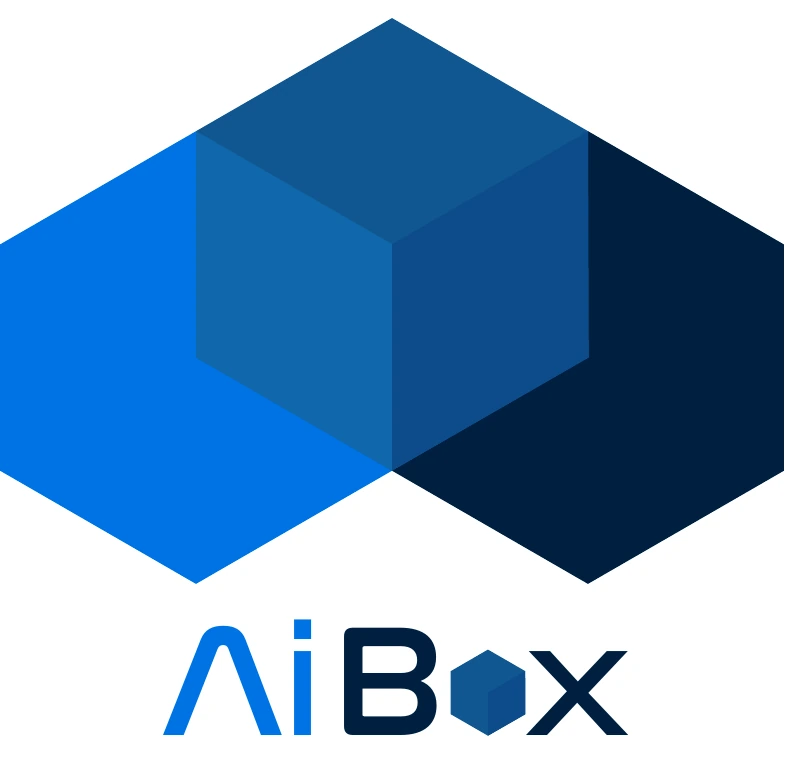
The logo combines three elements representing people, design and artificial intelligence. Together, they form an expanding cube and an upward-pointing arrow.
The shades of blue reflect the concept’s technological character. For the wordmark, I used Ray Larabie’s Nasalization typeface.
Motion design
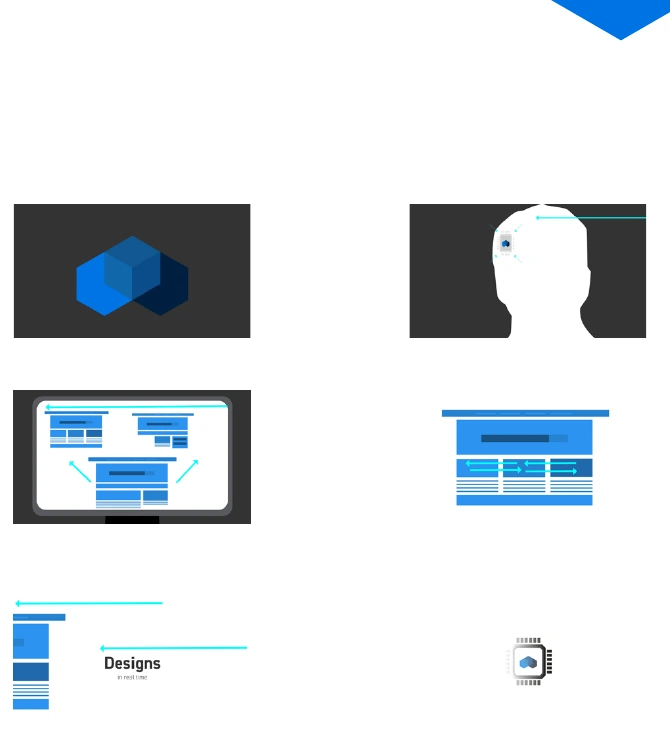
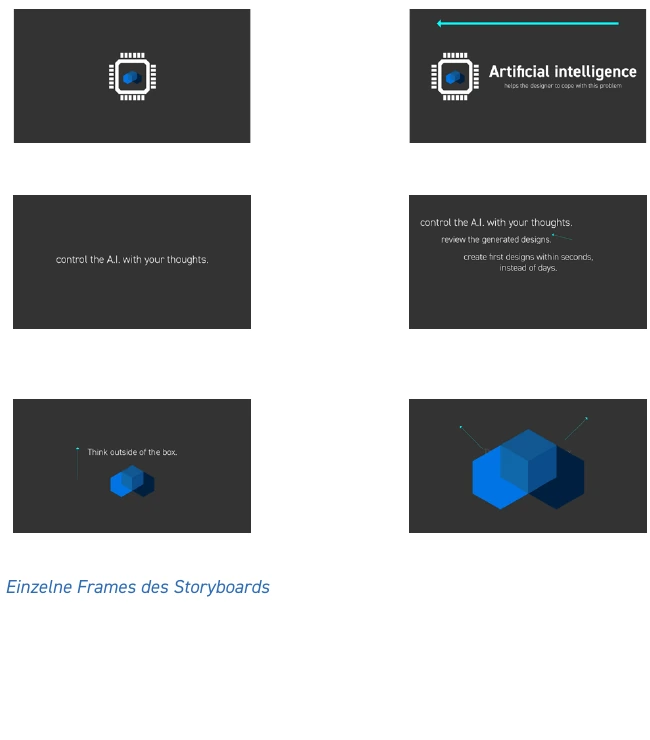
To introduce the fictional product, I conceived a teaser of around two minutes in a 2D animation style. The concept uses on-screen text, silhouettes, atmospheric music and short sound effects rather than spoken narration.
The storyboard shows how AiBox could help during a creative block and visualise different design directions during a briefing. It opens with the symbol and closes with the logo, product name and an invitation to take part in a trial.
Conclusion
The thesis connects research into a technological development with my own design application. From the possibilities I researched, I developed a product concept, visual identity and narrative for a promotional video.
My conclusion in 2021 was that AI could primarily support designers as an assistant and simplify their workflows. This understanding forms the core of AiBox.
The PDF documents the research, sources, logo development and storyboard.
Bachelor thesis (PDF)